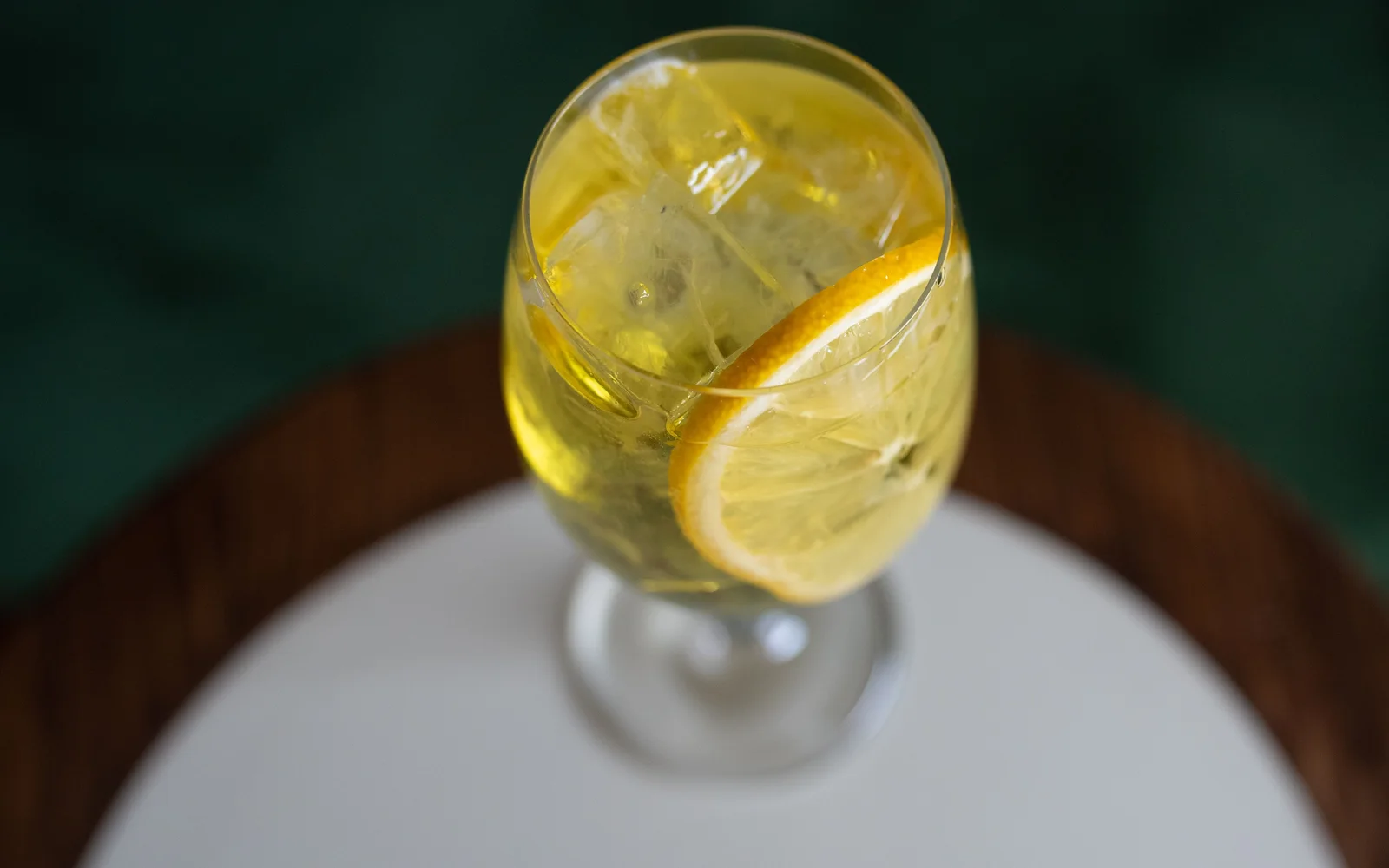
If you want a little alcohol without starting from gin, whiskey, or another spirit, make a white wine spritzer first. ABV means alcohol by volume, the percentage printed on the bottle to show its alcoholic strength.
Mix 60 ml (2 oz) of chilled dry white wine with 120 ml (4 oz) of plain sparkling water. With wine at 12% ABV, the 180 ml drink is about 4% ABV before ice dilution. It tastes like a colder, more refreshing glass of white wine with bubbles, not a sweet cocktail.
Start with wine and sparkling water
Fill a highball or wine glass with ice. Add the chilled wine, then pour freshly opened sparkling water down the side of the glass.
Lift once gently from the bottom and stop. If you have a lemon, express a strip of peel over the rim. Skip syrup for the first drink.
The term low-ABV does not decide the recipe for you. The bottle strength and the amount you pour determine how much alcohol is in the glass.
The same 180 ml drink can vary widely
Sixty milliliters of 12% wine contains 7.2 ml of pure alcohol. Add 120 ml of sparkling water and the finished concentration is about 4%.
A common gin and tonic starts with 45 ml (1.5 oz) of 40% gin, which contains 18 ml of pure alcohol. Add 135 ml (4.5 oz) of tonic and the same 180 ml drink is about 10% ABV before ice dilution.
Sparkling water lowers the concentration and softens the taste. It does not remove the pure alcohol already poured. Check the bottle strength, then check the measure.
Keep the method short to preserve bubbles
Chill the glass, wine, and sparkling water. Fill the glass with ice, add the wine, and pour sparkling water last. Stir once, gently.
There is no complicated technique. Cold ingredients and a newly opened bottle of sparkling water do most of the work.
Adjust 15 ml next time
If the drink tastes thin, raise the wine from 60 to 75 ml (2 to 2.5 oz) next time and leave the sparkling water at 120 ml.
If it goes flat quickly, chill the sparkling water, open it just before pouring, and stir only once. If it becomes sweeter as it warms, check that the mixer is plain sparkling water rather than tonic or lemon soda.
Low-ABV still contains alcohol. Choose zero alcohol before driving, during pregnancy, for minors, or whenever alcohol must be avoided.
FAQ
What ABV counts as low alcohol?
There is no single casual-use threshold that fits every country and product. At home, compare the base ABV and the amount poured, then estimate the finished concentration.
Does adding lots of sparkling water make any drink low alcohol?
It lowers concentration, but it does not remove the pure alcohol already poured. A 45 ml pour of 40% spirit contains much more alcohol than 60 ml of 12% wine.
Why start with wine instead of a smaller spirit pour?
Wine begins at a lower strength and keeps fruit and acidity when mixed with two parts sparkling water. A very small spirit pour can taste watery before it becomes truly light.
Is a low-ABV drink safe before driving?
No. Low-ABV still contains alcohol. Choose zero alcohol before driving, during pregnancy, for minors, or whenever alcohol must be avoided.
Sources
- NHS alcohol unit calculation
The NHS formula is ABV × milliliters ÷ 1,000. This guide uses the same relationship to compare pure alcohol poured. Mixed-drink ABV is an estimate based on label strength before ice dilution.
- NIAAA reference drink strengths
NIAAA uses about 12% for table wine and about 40% for distilled spirits as common reference strengths, while noting that actual products and pours vary.
- WHO alcohol fact sheet
WHO notes that alcohol risk depends on amount, frequency, health status, and context. Low alcohol is not a no-risk or health label.