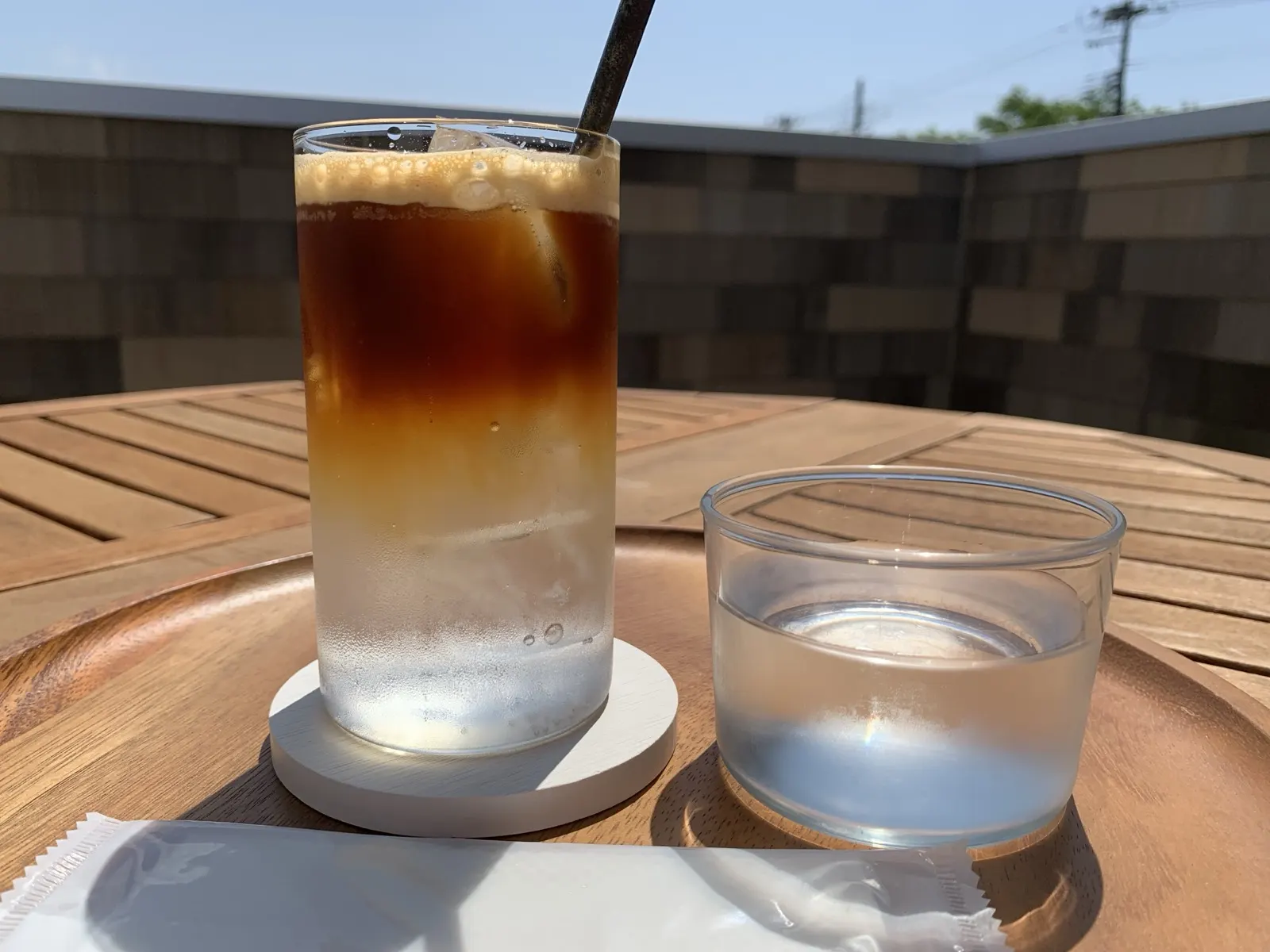
Taste both sources of bitterness
Cold Brew Tonic contains two bitter systems. Coffee can contribute roast bitterness and a dry extraction finish. Tonic brings quinine bitterness along with its own sweetness. When both are forceful, the combination can taste medicinal.
Before building the drink, I taste the cold brew and chilled tonic separately. Burnt or very dry coffee needs a smaller dose or a different base. A long, dry tonic finish does not pair easily with dark cold brew. Finding that conflict early is more useful than adding sugar to the finished glass.
A 1:2 ratio leaves room on both sides
Fill a tall glass with firm ice. Add 120 ml chilled tonic, then let 60 ml cold brew run slowly over the ice. This starting ratio preserves recognizable coffee while leaving space for the tonic’s sweetness, bitterness, and carbonation.
Very strong cold brew can rise to 70-80 ml. Ready-to-drink cold brew that is already light needs less tonic or a smaller finished drink. The layer is temporary. Lift once from the bottom before drinking instead of repeatedly stirring.
Bitter, sweet, and thin need different corrections
Roast bitterness and dryness that sit at the back of the palate call for less coffee or a softer roast profile. Long quinine bitterness with a medicinal edge calls for a more familiar or slightly sweeter tonic. Change one side so the result remains understandable.
For excess sweetness, use a lower-sugar tonic or replace half the tonic with plain sparkling water. Adding more coffee reduces perceived sweetness but also adds coffee bitterness.
A thin coffee-water finish points to a weak base or too much tonic. Concentrate the cold brew or shrink the drink. Syrup adds sweetness but cannot restore missing coffee aroma.
Low sugar and citrus still have tradeoffs
Sugar-free tonic can expose quinine more strongly because there is less sweetness around it. Mixing regular tonic with plain soda, or combining soda with about 5 ml syrup, gives more direct control.
Lemon or orange peel changes the aroma without adding much acid. A large squeeze of juice can make bright cold brew taste sharp. When the glass keeps its bubbles, both coffee and tonic remain recognizable, and the finish is dry without becoming medicinal, the ratio is working.
Recipe reference
Keep this recipe handy
Ingredients
- 100-120 ml (3.5-4 oz) well-chilled tonic water
- 50-70 ml (1.7-2.4 oz) ready-to-drink cold brew
- A full glass of solid ice
- Optional: lemon or orange peel
Tools
- Tall glass
- Jigger or small measuring cup
- Bar spoon, used only if adjustment is needed
Method
- Chill both the tonic and cold brew.
- Fill a tall glass completely with ice.
- Pour in 100-120 ml tonic water without splashing.
- Slowly add 50-70 ml cold brew over the ice.
- Taste before stirring; add citrus peel only if it improves the coffee.
Use what you have
- No cold brew: use 35-45 ml espresso cooled for a few minutes, but expect a sharper drink.
- Tonic is too bitter: replace one-third to one-half with plain sparkling water.
- No citrus peel: omit it rather than adding a large squeeze of juice that overwhelms the coffee.
If the result is off
- Too bitter: both tonic and coffee are contributing bitterness. Use a lighter tonic or reduce the cold brew.
- Flat drink: warm ingredients, weak ice, or vigorous stirring released the carbonation. Chill everything and stir once at most.
- Watery finish: too little ice melts faster. Fill the glass rather than using only a few cubes.
- Medicinal taste: a strongly quinine-forward tonic is fighting dark-roasted coffee. Change one of them before adding sweetness.
Cost and effort
A home serving typically costs about US$1-3, mostly depending on the tonic and coffee.
FAQ
What is the best Cold Brew Tonic ratio?
Start near 2 parts tonic to 1 part ready-to-drink cold brew, then adjust for the strength of both products.
Can I use espresso instead of cold brew?
Yes, but use a smaller amount and expect more acidity and roast intensity.
Why is my Cold Brew Tonic so bitter?
The tonic may be strongly bitter, the coffee may be over-extracted, or the coffee ratio may be too high.
Should I stir it?
Taste it first. One gentle lift is enough if the bottom is too sweet.